Knowing how to read a prescription medication label is important for taking medicine safely and correctly. If you don’t understand the instructions, you might take the wrong amount or at the wrong time, which could be harmful. This guide will help you understand each part of your prescription label.
What is a Prescription Medication Label?
A prescription medication label is an official label placed on the packaging of a prescribed drug. It provides essential information to ensure safe and correct use of the medication. The label is issued by the pharmacy when dispensing the medication and includes details about the patient, the medication, dosage instructions, safety warnings, and refill information.

Why Is It Important to Read a Prescription Medication Label?
Your prescription label gives you essential information, such as how much medicine to take, when to take it, and any warnings to follow. Reading it carefully can help prevent mistakes and keep you safe.
What’s on a Prescription Medication Label?
A prescription medication label contains crucial details that help you take your medicine safely and effectively.
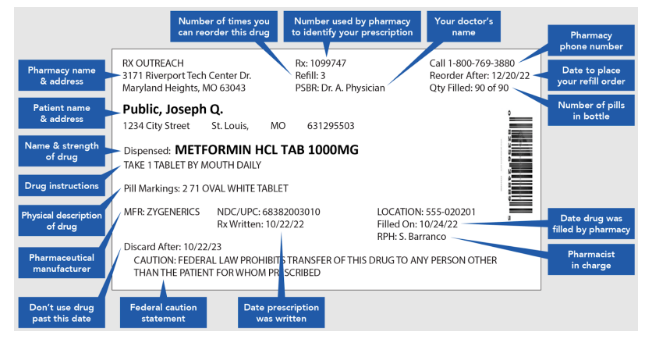
Here’s what you’ll typically find on a prescription label:
1. Pharmacy Information
- Pharmacy Name & Address: Identifies the pharmacy where the medication was dispensed.
- Pharmacy Phone Number: A contact number to call for questions or refills.
2. Patient Information
- Patient Name & Address: Confirms who the medication is for, ensuring the right person takes it.
3. Prescription Information
- Prescription Number (Rx#): A unique number assigned by the pharmacy for tracking and refills.
- Doctor’s Name: The prescribing physician’s name.
- Date Prescription Was Written: Indicates when the doctor prescribed the medication.
- Date Drug Was Filled by Pharmacy: The date the medication was dispensed.
4. Medication Details
- Medication Name & Strength: The name of the prescribed drug and its dosage (e.g., Metformin HCL Tab 1000MG).
- Dosage Instructions: How much to take and how often (e.g., Take 1 tablet by mouth daily).
- Physical Description of Drug: Includes markings, shape, and color for identification.
- Pharmaceutical Manufacturer: The company that produced the medication.
5. Refill and Expiration Information
- Number of Refills Allowed: The number of times you can reorder before needing a new prescription.
- Date to Place Your Refill Order: When you should request a refill.
- Quantity Dispensed: The number of pills or amount of medication in the container.
- Do Not Use After Date: Indicates when the medication should be discarded.
6. Safety Warnings and Legal Information
- Storage Instructions: Some medications require refrigeration or need to be stored in a cool, dry place.
- Federal Caution Statement: A legal warning restricting drug transfer to another person.
- Potential Side Effects & Warnings:
- May cause drowsiness, do not drive.
- Avoid alcohol while taking this medication.
- Take with food or on an empty stomach, as directed.
- Drug Interactions Notice:
- Warnings about interactions with other drugs, foods, or activities.
Common Abbreviations on a Prescription Label
Doctors and pharmacists use short forms for instructions. Here’s what they mean (for a full list, visit Medical Abbreviations Explained):
- QD – Once a day
- BID – Twice a day
- TID – Three times a day
- QID – Four times a day
- PRN – As needed
- PO – By mouth
- IM – Injection into muscle
- IV – Injection into vein
If you don’t understand an abbreviation, ask your pharmacist.
Tips for Taking Your Medicine Correctly
- Always Check the Label
- Confirm the medication name, dosage, and expiration date.
- Follow Instructions Exactly
- If the label says “with food,” take it after eating.
- If it says “on an empty stomach,” take it one hour before or two hours after meals.
- Use a Pill Organizer
- Helps you keep track if you take multiple medications.
- Set Alarms or Use an App
- Reminders can help you take your medicine on time.
- Check for Interactions
- Some medications should not be taken with certain foods, alcohol, or other drugs. Ask your pharmacist if you’re unsure.
- Store Medicine Properly
- Keep it in a cool, dry place unless told otherwise.
- Dispose of Expired Medicine Safely
- Don’t flush medicine down the toilet. Many pharmacies offer disposal programs.
What to Do If You Have Questions
- Ask your doctor or pharmacist if something is unclear.
- Read the medication guide that comes with your prescription.
- Use online pharmacy tools for more information.

FAQs About Prescription Medication Labels
1. What should I do if my prescription label is damaged or unreadable?
If your label is damaged, contact your pharmacy immediately for a replacement.
2. Can I take my medication if the label says it’s expired?
No, expired medication may not work properly and could be harmful. Always check expiration dates and dispose of expired medicine safely.
3. Why does my prescription label say “take as needed”?
This means you should only take the medication when necessary, such as for pain relief or allergies, instead of on a fixed schedule.
4. What does “No Refills” mean on my label?
It means you must contact your doctor for a new prescription if you need more medication.
5. Can I transfer my prescription to another pharmacy?
In many cases, yes. Contact your pharmacy to check if your prescription is transferable.
Conclusion
Reading your prescription medication label correctly is essential for your safety. By following instructions, understanding warnings, and consulting your healthcare provider when needed, you can take your medication safely and effectively.